Lisboacon 2011 highlights

boardgame prototype, event, Sinking

Lisboacon 2011 was great! I don’t know the official visitor count, but everyone was saying there were more people than last year’s 1000.

It was inspiring to see other Portuguese designers and their creations. All of them were kind enough to answer all my questions about publishing and copyright. I had met some of them previously and it was really cool to see that they remembered me and they asked how my game was going.

Hat’s off to Criações a Solo and “Trench”! It’s an abstract strategy game that revolves around the concept of WWI trench warfare, and most of your strategies will be around using it for your advantage. It’s clean, polished and has a lot of potential. I get why they’re marketing the game as an art piece as well because it’s easy to imagine it being displayed on any modern house – it’s playable jewelry.

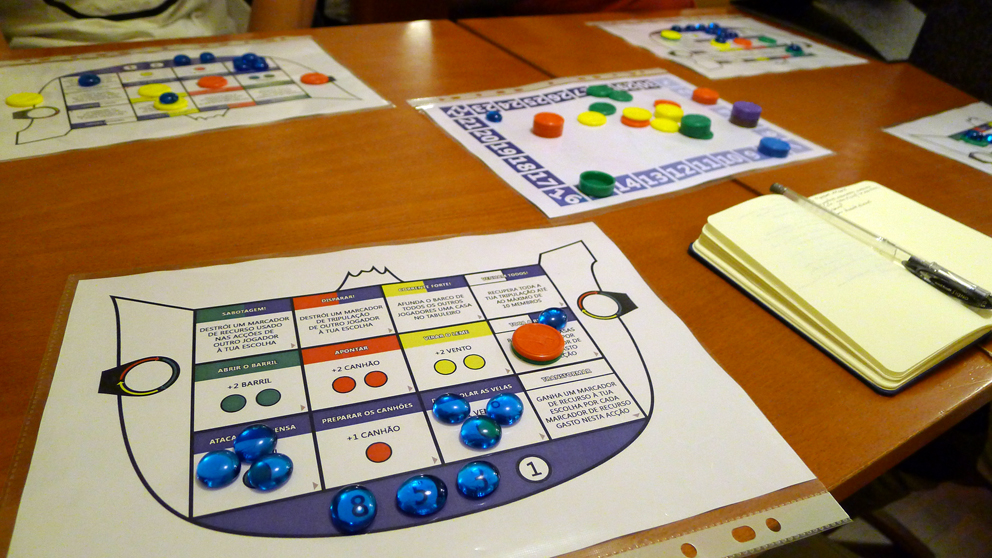
I also playtested “Sinking” with great feedback. I also found out that two of the colors I am using for the game (red and green) are very hard to tell apart by the colorblind. I brought all of my available tokens the following day and we chose new colors that don’t cause as much hassle. I’ll update the boards ASAP.

I had no idea this issue was so common. If you’re curious about this and want to see the world through the eyes of the colorblind, check this site. I’ll be paying more attention to this in the future.

Lisboacon 2011

boardgame prototype, Sinking

Don’t know what to do with all that free time? Are you board?

Lisboacon is this weekend. It’s a boardgame event in which you can try games out, participate in tournaments and meet cool people. …and it’s free!

I’ll be there with “Sinking”, trying out the Hive tournament and being impressed that these things have happened for years without me ever knowing about them.

All the details are here.

“Sinking” Milestone 1 – Design

boardgame prototype, playtest, Sinking

The design for “Sinking” is complete! The changes to the way ties are solved worked just as I hoped. The rules are now easier to memorize and after a couple of turns new players seem to really get the hang of it. As a matter of fact, yesterday the new player ended up winning!

I’d like to keep testing it to better define how long the games should be. This doesn’t involve changing the player boards any further, just changing the limits on the center board. For the record, last night teaching the rules took 5 minutes, the game itself took 35. Obviously this number will change as players and strategies change. If it wasn’t for this devastating double attack it could have easily taken 10 more minutes. My goal was 45 so it’s pretty close.

What’s next? First I have to write the rules in a clear way so that players can learn how to play the game from there. That is mostly done. I know from experience a bad manual can wreck the whole experience so I’m paying special attention to that.

After that it’s time to work on the iconography and further develop the look of the boards.

The main part for me is done, though. My goal was to create a game from scratch with interesting dynamics and tweak it until it was fun. I wholeheartedly enjoyed the process, so I’ll keep going.

Design notes: Blind bidding ties

boardgame prototype, Sinking

In the last post I was talking about ties in other blind bidding games. This post is mostly about dealing with that, along with some notes on avoiding band-aid game design.

When I was researching this game type I noticed that a lot of these games cancel each other out. After playing a couple I found this to be pretty frustrating and I thought that avoiding that could be a cool feature for my game.

In the most recent version there is no tie in which the bids are canceled.

To achieve that I defined that the player that has sunk the most wins ties. This could turn some nasty situations around, and sinking faster would be a viable strategy in the beginning of the game. At least one player per game so far does this willingly. They let it sink, get some resources and go back up before the other players even thought about fighting for that action.

Their only worries are outbidding the other players and not sinking.

This creates a weird situation where the two sunken boats can be in the same spot on the board. Who wins then? I started experimenting with placing the boats in line inside board spots, allowing for the player who’s been there the longest to stay in front of that line. There, solved – or so I thought.

I taught the game to a couple of people who don’t regularly play games and they found these rules hard to memorize. That just means this made no sense to them. But…I was just trying to give everyone a change to progress even if there is a tie!

In an attempt to simplify these situations and have a unique rule for solving ties, I thought back at those other games in which ties cancel each other out. This can be frustrating for the players, but it gives each bid a greater importance. Now, instead of just thinking about outbidding the other players you really have to consider that they might be betting on the same action. Having that action cancelled is bad for both as all resource tokens spent in the action will be discarded just as if they’ve been used. This will most likely promote some more variety in the actions the players will be doing because each of them will have a good reason to play in an unpredictable way – and give some extra chance to the losing players because (at least) two bigshots will waste a turn and lose some resources at the same time.

Now I get why other designers chose this.

This still gives losing players some time, brings up a new layer to the mind game and is a lot more elegant. I’ll be experimenting with that in the next playtest.

Prototype update: Hold on to that piece of wood!

boardgame prototype, event, Sinking

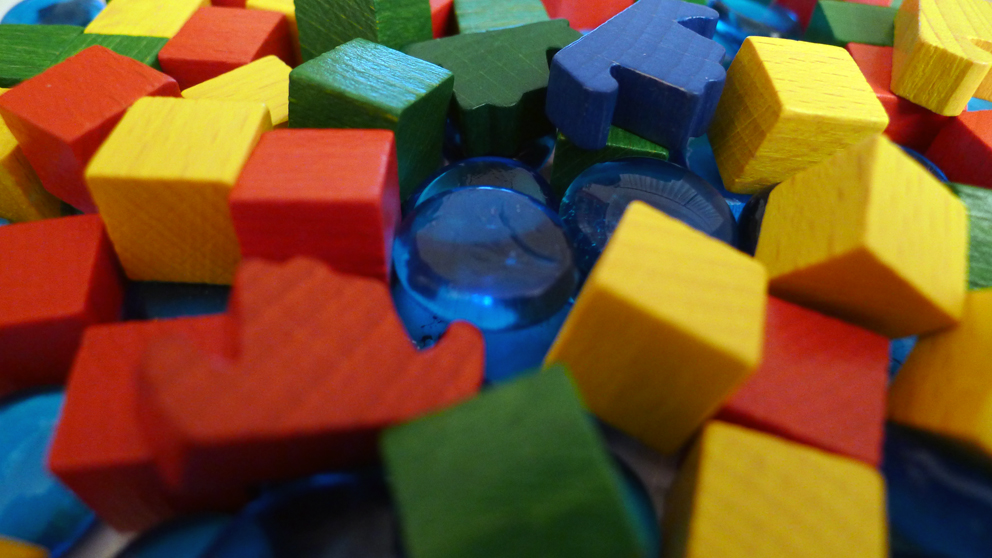
Finally the new wooden tokens have arrived! The coins stacked up nicely but the cubes take up less space, allowing me to print smaller boards if it need be. It brings a more familiar, warmer feel to the game which works well when opposed to the cold crew member pieces.

I tested the game again with a new player and he got sort of confused about the way the ties are solved. I had a couple of different situations with specific rules, but it seems like a unique universal answer is a lot easier to memorize, so I’ll be sure to try that out. That’s what I get for not cancelling them out like most games do! I do get why they do that though, and I’ve been tempted to do that as well because it has the potential to add to the mind game and scatter the resources in interesting ways.

That’s all fine and dandy, but here comes the real question: Did I win? No.

Showing the game at Eurogamer Expo was nice, I got to meet some of my idols and definitely got some people curious about the game. Showing it as part of my design portfolio seemed to pay off because too many game designers pay attention to videogames exclusively and they end up running around in circles. There are a lot of fresh ideas in boardgames that haven’t made it to videogames yet, and I believe clever designers will eventually pick that up and run with it.

Eggscape got 10th place!

boardgame prototype, competition, Eggscape, event, Game Jam, Ludum Dare, Overpopulous, Sinking

Eggscape got 10th place in Ludum Dare Jam 21, ranked the 5th most innovative game! As if that wasn’t enough, it got into PC World‘s “10 Free addictive games to play in your browser”  and Nerd Age‘s “Ludum Dare’s Favorite Games”! This is great motivation to finish everything that was missing and officially release it to the world as a complete game.

With all of the ties solved the boardgame is running pretty smooth! I’ll still keep on testing but seems like it’s complete – until I spot a splinter, which hasn’t happened in a while.

This week I contacted two portuguese boardgame designers with a respectable portfolio and they gave me some very good advice. Seems like odds are strongly against boardgame designers at this time. I reached the point where I have a fun game that people enjoy and that was the most important part of this project. Editing it would be another great step forward, but one that has to be carefully planned first.

I’ll be in Eurogamer Expo in London this next week. If you’re there too come and say “Hi!”, I’ll be the smiling guy with the tired eyes and the accent you can’t quite identify.

Playtest update – pirate ties

boardgame prototype, playtest, Sinking

Yesterday’s playtest had two neat surprises:

  1. The game is balanced now
  2. I won at my own game for the first time

I finally reached the fine balance I was looking for. I took notes about the problems I noticed in this session, but they were only about solving the several types of ties that can happen mostly at the start of a game. I won’t change the player boards for the next sessions, this version seems like a winner so I’ll play it until it breaks.

Speaking of winner, I finally won! It took 12 play sessions  but I did it. That’s how you know the game isn’t rigged – though now you can argue I’ve been changing my game so that I can finally win.

Also, if you’re hanging around Lisbon check out MOTELx! Besides the horror flicks there will be a Horror-themed Boardgames and Roleplay session from 19h to 5h from Saturday through Sunday. Come by Cinema São Jorge and give your brain a workout! All the cool kids are doing it.

Playtest update – making it more intense

boardgame prototype, playtest, Sinking

Another really good playtesting session showed me a couple of things that could be better about the player boards. Good thing that paper prototypes allow me to just write the changes on them and use them in the next game.

Those minor changes made the game a lot tighter. Some exotic ties were solved and now the boat can sink a lot faster. Going “all in” is an even bigger risk than before because now it allows the other players to make you sink even further.

I thought these changes would make the game a lot faster -and that would send the endgame spot on the board flying from 20 to 30 – but that didn’t happen. Both games lasted just as long, but this second one was way more intense.

It gets to a point where everyone sort of forgets about fighting and just wants to drain water out of their ships! The ending is very tense, but it’s balanced so that no players get too far ahead. So far haven’t found an optimal strategy because the real action costs change every turn.

Still need something to identify the players’s ID colors so they can plan accordingly. Asking a player’s color can reveal your secret plans and that shouldn’t be part of the game. Other than that I don’t think I’m going to change the boards for the next playtest because it’s really solid.

Time to think of a name for it!

Playtest update – we’re getting there!

boardgame prototype, playtest, Sinking

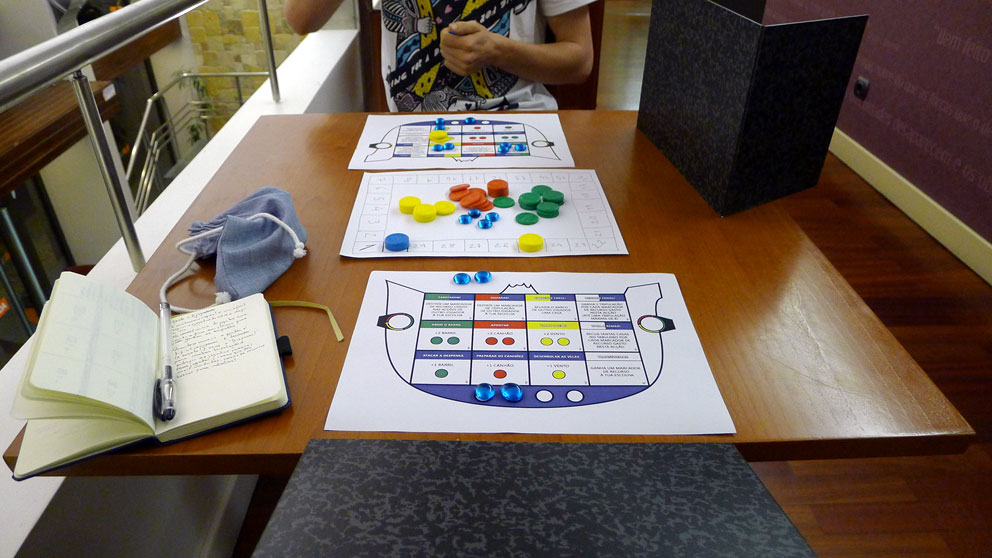
This third playtest was by far the most successful one, but it started on a road bump. I got there and realized I didn’t print the new center board (the square one with all the numbers) and had to improvise one on the spot. It worked well enough, nobody complained. It may actually have lowered expectations from new players and eased them in.

At the start there weren’t that many people available for a game so I tried a two-player game for the first time. I didn’t really know if it was balanced or not. Turns out the game is a lot faster with only two players, but it’s hard to bring back dead crew members because the winning player can use the two cannons to attack, and score most of the time. I’ll test it out more and fix some of the rules for a fair two-player game.

The four player game was by far the most balanced yet and most fun yet. The new rules made it a lot more interesting, because going “all in” puts you in great risk. We cut cut the board short at 15 because it was really late, but that made the game more intense and I was very surprise when it brought a crowd in to watch the final turns.

More than that, the people who were watching were mainly people who hadn’t played it before and were curious about the rules. A couple players wanted to know what had changed since last time because both boards looked different.

It’s really getting there, and it will only get one minor wording tweak for the next playtest.

Big thank you to all the playtesters, you’re shaping my original idea into a good game!

Prototype update – water’s leaking in!

boardgame prototype, Sinking

Water’s leaking in! The new ship design update now features an area where the water level is rising. The players can order their crew members to the base of the ship, where they’ll throw water out and actually control the speed at which you’re sinking. It also turns “all in” bids into something risky and a gamble.

The “Attack” and “Defend” zones now have cannons which point in to other player’s positions (Defense was working pretty much as a second attack, no point in confusing players) with slots for the resources and the wheel that explains the rock-paper-scissors fighting logic.

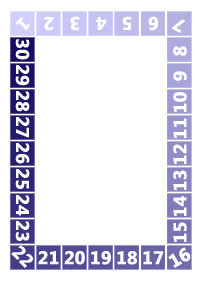
I made a new central board that represents the amount of water that leaked inside each boat. The previous spiral board was meant to represent the player ships actually going down on a whirlwind  (which also made every boat sink 1 square at the end of each turn). This is not intuitive and it’s easily forgotten, and ended up being more of an annoyance than welcome flavor.

Now it’s rectangular-shaped, so it allows the free space in the middle of the sheet to serve as storage space for spare crew members and resources. More than once the spiral made it hard to understand which way was “good” and which one was “bad”, and that’s why this gradient color scheme is there. Plus, it fits the theme and hopefully it will be easier to read.

Dice are most certainly out. I want the game to be played by player’s choices and failures rather than by a random element. Changed the attack effect to allow this, and created a situation where the players may wish to wait to a point where their attacks are more effective.

Now I’ll look at the ships for a couple of bus rides, fix what’s wrong and print in time for the Wednesday playtest session!