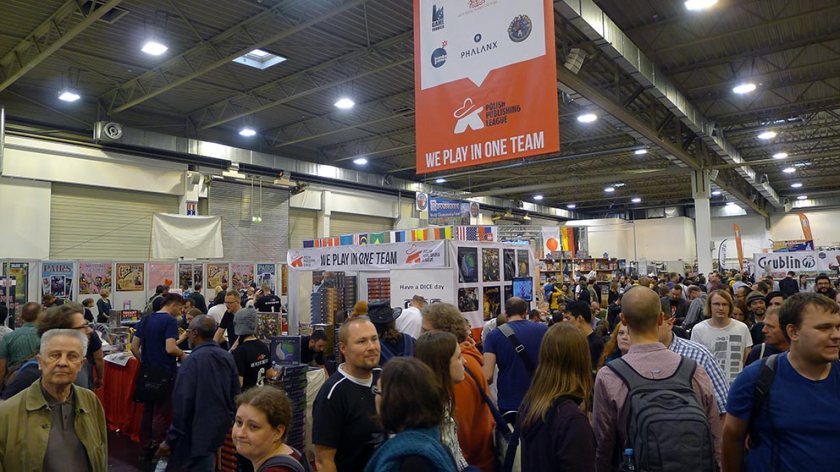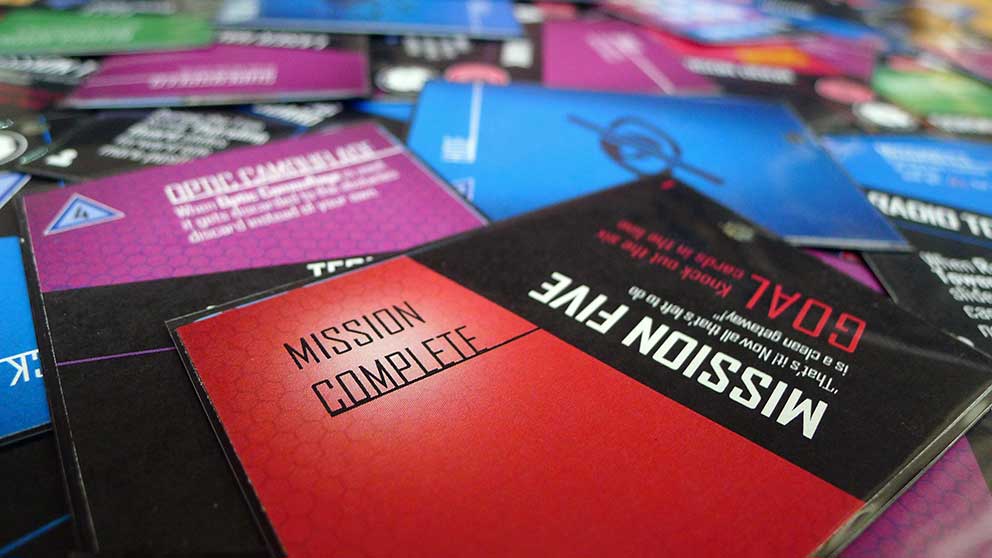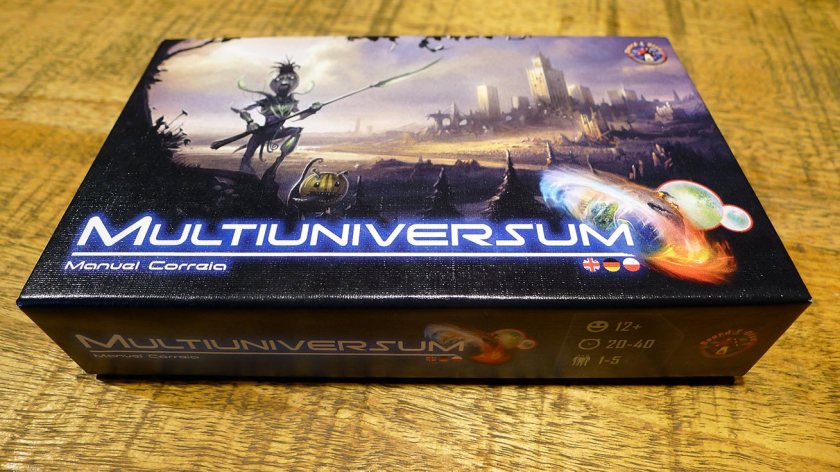
Multiuniversum at UK Games Expo 2016

Arcádia, boardgame, boardgame prototype, event, Multiuniversum

MU_box

It’s real! As of this June 3rd, Multiuniversum is officially released.

Off to a bumpy start, my flight was delayed so I only got to the event after most of it had closed for the day, leaving only the open play rooms. I was trying to find Board & Dice (B&D) to see how the final production copies had turned out. They kept me up to date with photos and videos, but I hadn’t seen a production copy in person.

Before I found them I noticed a family sitting at a table with a familiar box. They had done the setup and were reading through the rulebook, getting ready to play the game I had been working on for years. I wanted to say hello, maybe even teach them how to play but then it dawned on me that I have no idea what the etiquette for this type of situation was.

I paced around the table, got my phone out to take a photo and realized I had no signal. How can I arrange to meet if we can’t communicate? I went outside.

After meeting B&D and showing them around the open play rooms, we noticed the family had finished the game and were adding up the final scores. This time we said hi, talked to them for a bit and they asked me to sign their copy!

13332843_1101128823279401_3498912873268501766_n

Not just any copy. The first production copy I ever saw.

It was pretty unbelievable.

We kept playing it most of the night, and it was a lot of fun seeing players look through the crazy universe illustrations for the first time. The angry gummy bear was clearly the most popular one.

When the players recognized the game I wondered where they had seen it before, and the answer was unanimous: Rahdo’s runthrough. Thank you Rahdo!

13312623_1101287959930154_7840178547399314324_n

I spent the most part of the next two days demoing the game, teaching and playing it with everyone who popped by the booth. The response was very positive. Most players bought a copy after the game was over and some even came back for an autograph!

Most people just asked for a signature, others asked for a note and one player even asked for a thematically-appropriate joke. Cheers to Robin David, who saw that picture of me signing a copy and brought me a much better pen from Ireland the next day!

During the night I saw the game being played all over the open play rooms, an amazing feeling after working on it for so long.

MU_play

It seems word got around and by the end of Sunday it sold out!

All 400 copies.

Thank you everyone! But especially:

p1100015 (1)

Multiuniversum release!

boardgame, boardgame prototype, Carousel, event, Multiuniversum

13221501_1086935474698736_275743966968642931_n

Are you going to UK Games Expo? I am. Couldn’t miss the release of my first card game: Multiuniversum!

If you’re going to the event why don’t you come over to Board & Dice’s booth and check it out? When I’m hanging around I’ll teach you how to play and even lose graciously.

Meanwhile Multiuniversum is popping up all over the boardgame social media. There are a several reviews in Polish already (thank you Google Translate!).

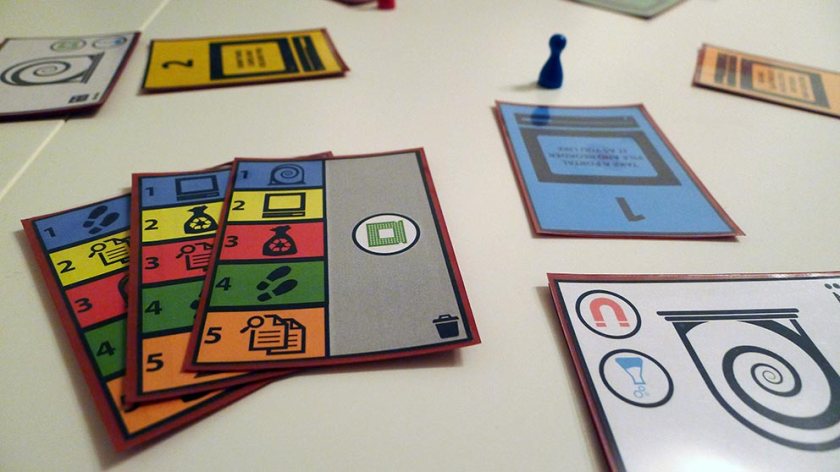
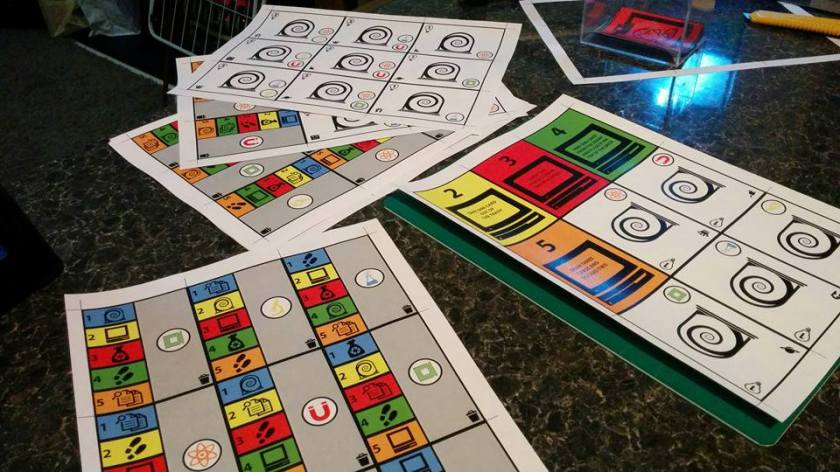
Uplift Andrew assembled a print-and-play copy and took awesome photos, like the photo in the header and  these other great photos!

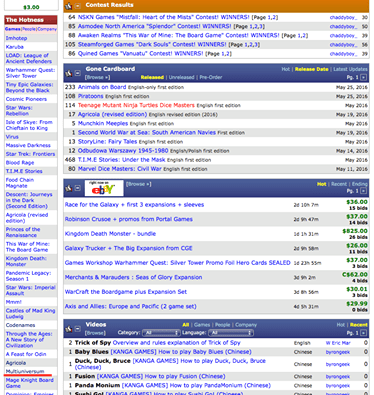
Then it got into the Top Hotness in BGG:

13245423_1096089257116691_9189818224940385223_n.png

Then Rahdo did a runthrough!

This is a big milestone for me, I love Rahdo’s videos so this feels like having a cameo on my favorite TV show.

Dice Tower mentioned it in the UKGE Preview video (at around 10:00). The art got their attention, now we just need to get them to play it. It’s a pity Zee Garcia isn’t coming with them because I believe he would like it the most.

This has been a long time coming. The first post about it is from 13 March 2012 – four years ago! It’s been through many iterations, a few themes, three countries and three loyal playtest groups. All because I stumbled around a mechanic which I hadn’t yet seen in a game and found it intriguing.

I learned a lot, and I can’t wait to hold a final production copy in my hands.

Come share that moment with me, this weekend in Birmingham!

What if there were no bad cards?

designer tips, Multiuniversum

pic2926763

The game is almost over. It’s your turn and this time you have a chance of winning. You draw a card and – oh no! Not that card. That’s not the one you need. Your opponent takes the victory. Again.

We’ve all been there.

Every designer has its own process, but the starting point seems to be a big point of contention. Do you start with the theme (setting) or with mechanics (how the game plays)?

For Multiuniversum, it started with a question:

“What if there were no bad cards?”

Every action card has all the possible actions in the game, shuffled around. You can find them on the left half of the action cards. Each action is in a slot with a color and a number, which corresponds to the computer stations on the center of the table.

The computer where your character is defines the slots you can use.

P1090328s

For example, in the above image you’re at Computer #1, so you can do any of the actions on the first slot of the cards.

If you use the “Move” action on the leftmost card, you can walk your scientist over to any other computer. If you move to Computer #3,  you’ll be able to use the actions on the third slot of your remaining cards.

This is the core of the game. That action you really need? You’re holding it in your hand. The challenge is to figure out how to chain the actions to make the most of what you’re dealt.

With three actions per turn, this creates a tree of possible choices for the players to explore while they wait for the next turn. It gives the players the feeling that they’re in control, and the solution can be found somewhere in their hand.

There’s no joy like seeing a silent, focused player unleash a mighty “Eureka”!

Multiuniversum will be published this June by Board & Dice. If you want to keep up to date with all the updates and awesome art, please consider subscribing to its BoardgameGeek page!

Don’t wake the dragon!

boardgame, boardgame prototype, competition, Don't wake the dragon

DWTD_header

“Don’t wake the dragon” is a dexterity game created in a day for GameCraft UnPlugged at Pulse College. The theme and restrictions were:

  • Fairy Tale
  • 2 players
  • 3 rounds

I had a backpack filled with standard game components (cards, sleeves, dice) to allow me to adapt to any theme, but wouldn’t it be fun to make something different from the rest of my portfolio? That means cards, cubes and dice are out!

What else is there?

The first thing was to play with them. Stacking them, throwing them at each other.

…hey, turns out they’re thick enough to flick around!

That’s a mechanic I really enjoy. It reminds me of playing marbles as a kid, and it’s so self-explanatory when you see it in action. The laws of physics do most of the work, creating interesting situations and choices without adding rules and exceptions.

In the game your command your soldiers to steal from a dragon who’s asleep on top of a pile of gold.

To do so you order(flick) your group of soldiers (blue or red disks) to steal gold coins (white and orange) from the dragon (black disk). If you take coins out of the arena they’re yours, but as soon as the dragon touches the table it wakes up! Game over. Not only that, but the dragon steals back your most valuable coins!

The level layout is just the beginning, and it changes as players take their turns. Coins fall from the tower and litter the arena, so you don’t always have to shoot for the tower. If a soldier leaves the arena (either you miss or someone pushes you out) then it stays out for that round.

You add up your coins for the level and proceed to the next one. At the end of three levels the player with the highest total wins!

With the simple components there was no need to create anything other than the game’s rules, so there was plenty of time to playtest.

Brainstorming (“playstorming”?) the levels with Sara was excellent. Build something, play it. Is it fun? Keep it! Not fun? Why? Edit the level. Test it out. Repeat.

In the end we got three different levels which presented the players with different challenges.

There was even some time to write a rulebook!  Not sure it was necessary, but it was good practice.

Did the players like it?

Yes they did!

It was the most relaxing game jam I was a part of so far, and picking a game I could finish comfortably in the available time was certainly a big part of it.

You can see the other games (and the winning entry!) at their official Storify!

Announcing Multiuniversum!

boardgame prototype, event, Multiuniversum, Pizza-go-round

A couple months ago I went to Essen to pitch my games and boy, have I got good news!

CTIrRr7WoAAi0sS

Board & Dice really liked the mechanics of Pizza-go-round. So much so that they’ve got a very clear idea of where they want it to go, and it’s a lot more exciting than delivering pizzas!

It’s called Multiuniversum!

We’ve been working hard on streamlining the gameplay and creating a new scoring system which gives the players clearer goals and fits this new theme.

I don’t want to spill the beans right away, but here’s a glimpse of the latest prototype:

CU2xnBTUYAE9uub

If you were at Pionek this weekend, you might have seen it!

Stay tuned.

A podcast and an interview!

Agent Decker, boardgame, boardgame prototype, competition, media

pnpcast

The Print ‘n Play Cast took a look at two games from the BGG Solo Contest: Austerity and Agent Decker! The whole podcast is well worth listening, but if you want to skip straight to the rules for Decker jump to 14:20 and if you want to listen to the review go to 24:22. They really liked it!

You can listen to it here.


nodontdie

Earlier in the year I was interviewed by David Wolinsky for “No don’t die”.

You can read it here.

It’s a long form interview about my experience with videogame design, the industry and the media that surrounds it. It was a very enjoyable conversation and I’m pleased that it wasn’t cut down for publishing.

There are so many great interviews on the site already, but if you want to keep them coming I suggest you to support it via Patreon.

Designer’s Guide to Essen Spiel – Part 3

designer tips, event, game design

P1080458

In Part 1 and Part 2 we talked about how to prepare if you want to pitch your games at Essen Spiel. In Part 3 we’ll cover handy tips for the event itself, and what you should do after it’s over.

2. AT ESSEN SPIEL
Cloakroom and lockers
You can find these right at the door and they seem really useful but keep in mind there will be massive queues when the event closes. Get there earlier and you could save up to a whole hour. 

The event itself gets pretty tropical, so my advice is simply do not bring a coat.

AEG bags
It’s likely you’ll be picking up games during the day and the room in a backpack runs out pretty quick. If you get a game at the AEG booth, whatever the size, they’ll hand it to you inside an enormous bag. Handy!

Wellbeing
You’ll be talking a lot so be sure to bring water and lemon drops. Also, learn where the bathrooms are!


MEETINGS
Here it is, the moment you’ve been waiting for! Don’t panic.

A. Get there early
You want to cause a good first impression so get to the booth a few minutes before the meeting.

B. Remember the names
If you’ve scheduled the meetings by e-mail, it’s unlikely you’ll be able to identify the person who you’ll be talking to. You’re going to have to ask someone so keep that name handy!

C. Start with the sellsheets
Setting up the game takes time and space, and good publishers will tell you right away when they won’t even consider it. Start by showing the sellsheet and only bring the game out if they ask for it or you want to show a particular detail.

D. Bring an extra prototype
If they really like your game they’ll want a copy to play with their team. If you’re meeting other publishers on the same day, bring more than one copy!

E. Take notes 
Did they ask for a digital prototype or the rules? Don’t leave that to the end of the day, especially if you’re having a lot of meetings. Write that down as soon as possible so you can free your mind and focus on the next one. 


3. POST-ESSEN
Follow-up
Read your notes from the meetings and send all the follow-up e-mails you said you would! Even if they can’t read them right away they’ll be right there for when they can.

Read the notes
If the publishers were interested in your games, they might have suggested some changes that they’d like to see in order to consider publishing it. Use these notes to guide your game’s next steps.

Take it with a grain of salt
Don’t worry if you’ve left Spiel without a signed contract. You’ve started conversations, sent out prototypes and soon you’ll get more feedback. You might have even heard some things about your games that you don’t agree with.

Taking criticism can be hard but hopefully now that you’ve had time to cool off a bit you’ll be able to see it from their point of view. The publishers know what they’re doing and there are a lot of different elements that can factor into their feedback. The biggest one seems to be their line of games and production. Even if your game is great, if it doesn’t fit their line, the fans will find it odd and likely off-putting. If it requires exotic components they’re not used to making, it ramps up the production costs so much that it might not be worth the risk.

Now you have an idea of what they’re looking for and you can use it to update your games and even take it into consideration when starting new ones. 

Good luck!

P.S: How did it go for me? Very well actually, and there’s a hint in this very post. Stay tuned!

Designer’s guide to Essen Spiel – Part 2

designer tips, event, game design

gamesbymanuel_sellsheets

Last week we covered the first half of the necessary preparations to pitch your board games at Essen Spiel. This week we’ll cover the rest. Keep reading and you’ll be ready in no time!

Sellsheets
An essential part of the process. You don’t know what you’re going to find when you show up to a publisher meeting so there might not be enough time to set up a game or show the components – I had a couple meetings where there wasn’t even a table!

With a good sellsheet you won’t need anything else.

To put it simply, sellsheets are full page ads for your games. They should show the game’s name, theme, mechanics and components at a glance, with clear photos to paint a good mental picture. If you pick the game’s photos so that you can use them to teach the game, even better! That way you don’t even need to take it out of your backpack. 

At the end of the meeting let them keep it! Publishers will be looking at so many games during the event that naturally they’ll start to blend together. This is a great way to make sure they don’t forget it, and it’s also useful so they can show it to the rest of their team.

Physical Prototypes
It’s good to have at least one physical prototype with you. The publisher may want to see the components, how much room it takes or even the rules. When talking about the game it’s possible you want to refer to something that isn’t on the sellsheet so it’s handy to have it around.

There’s a small chance they’ll even ask you to set it up so they can play a couple of rounds!

If the publishers are interested in the game it’s very likely they will ask for a prototype. Unless you’re using very specific components it’s safe to assume they already have them at the office so don’t be surprised if they just ask you to e-mail files they can print and play.

Otherwise they might ask for a physical prototype! If you’re having multiple meetings in one day, be sure to bring more than one copy.

Be prepared!
This last step is entirely optional but I found it very handy! Compile a schedule with all the information you have about the meetings, the name of who you’re meeting, the time and what games they showed the most interest in. If you’re having a lot of meetings a small description of the type of games they publish is a really good way to regain focus from one to the next.

Print out the floor plans for the halls and mark down the booths in which you’ll have the meetings. If the schedule is too dense, you can also use this to figure out the fastest way between them.

There are some moments where the halls are so crowded there’s not enough room to reach into your backpack and take out a map. My solution was to fold them in half and keep them inside a notepad which I used to take notes throughout the event.

That’s it for the preparations!

Follow this link to read Part 3, which will cover key points during the event itself!

Designer’s guide to Essen Spiel – Part 1

designer tips, event, game design

222

After dreaming about it for years, I finally went to Essen Spiel in order to pitch my games to publishers. Have you ever thought of going? If so, read on!

1. PRE-ESSEN
When you book an appointment with a publisher you’re taking up time that could be spent on someone else. It’s unlikely that you’ll have a chance to play the games during the meeting so the publisher will have little more than your description to visualize your game.

If you can’t convince a publisher that your game is the best in the world, they’ll be more inclined to go with someone who can.

Book early
The longer you wait, the fewer affordable rooms and flights you’ll be able to find. If you really want to go, the best thing you can do is commit early.

Luggage
Your hand luggage should include a prototype of each game, a change of underwear and basic hygiene gear. Everything you can’t quickly replace in Germany should go in your hand luggage.

Schedule appointments
If you only follow one step in this guide make it this one! Otherwise it’s very unlikely that the publishers will have time to see your games.

Start by making a list of all the publishers you want to talk to. If you follow them in social networks you already know if they’re going to be there. If not, you’ll want to find out which publishers your games fit into.

To do so, there are two possible starting points. Spiel releases a complete exhibitor list and floor maps but it’s only published two weeks before the event. You can go through it and check the publisher’s websites to see which fit your games, but keep in mind there are a lot of them. This year there were 910 exhibitors.

If you want to start the list earlier there’s another way. BoardGameGeek compiles a list of all the new games that are going to be at Essen, and you can scroll through them to find games with theme and components that are similar to yours. From there it’s easy to look for the publisher’s contact details.

As for the e-mails, I kept them short:

Hello!

I’m a game designer and I’d like to show you my games! Do you have 30 minutes at Essen Spiel?

Thank you for your time,
Manuel

These few lines started several dialogues that lead to sending them a short description of the game’s themes and mechanics, along with a mid-game picture to make it easier to visualize.

It’s easy to go crazy and e-mail a big amount of publishers. I don’t blame you, this is exciting! One word of advice though: when booking meetings you should count on the time to go from meeting to meeting. Spiel is a huge event that takes place in several halls with hundreds of booths. I found half an hour to be just enough time to get lost and find my way to the right booth in time!

Follow this link to read Part 2, which will cover the last steps before the event!

At ease, agent

Agent Decker, boardgame, boardgame prototype, competition

P1080170s

The results for the 2015 Solitaire Print and Play Contest have been revealed, and it seems they really liked Agent Decker:

2nd Best Overall Game

1st – Best Medium Game
1st – Best New Designer
1st – Best Game with No Board
2nd – Best Greyscale Game
2nd – Best Written Rules
3rd – Best Hotel Game
4th – Most Innovative Mechanic
4th – Most Thematic Game
5th – Best Artwork

You can check the full list here. There are really good games and cool new concepts submitted to the competition, well worth playing.

As always, you can download the game for free here.

What a crazy year it has been so far! The design for Agent Decker started in January and since that time I’ve worked with three different videogame studios, gave my first lecture to game design students (which feels odd since I never got to be one), went to GDC for the first time and had the prototype with me while I met so many of my heroes. Recently I helped to start a local meetup where boardgame designers can bring their prototypes and get useful feedback.

Now i can finally correct that last typo in the rules that escaped every check before the submission.

And then, my first Essen Spiel! Can’t wait to pitch my games to publishers. My dream of publishing a board game feels closer now.

Wish me luck!