SUPERHOT: THE CARD GAME – DESIGNER DIARY 2

boardgame, boardgame prototype, designer tips, game design, Superhot

In the last post I wrote about the time flow, one of the main mechanics that bring SUPERHOT to life in the card game. Now let’s talk about the glue that holds it together: the bullets!

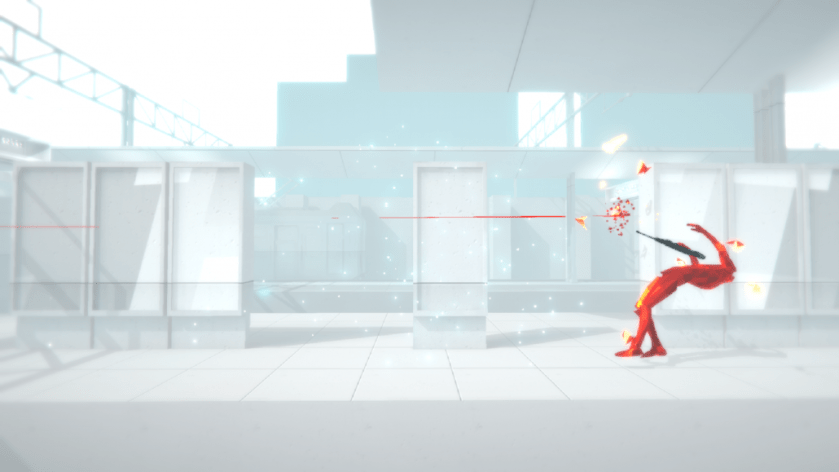
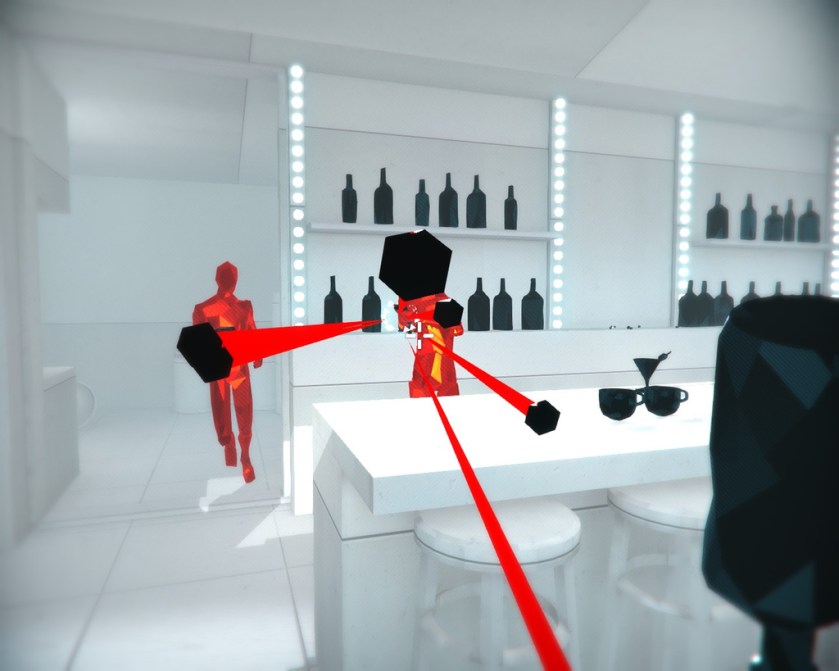
Bullets are an ever present threat in the original videogame. Pick any random moment in the game and the odds are you’re reacting to a swarm of bullets flying in your direction. If a single one hits it’s game over and you have to replay the level.

What can you do?
superhot_press_screenshot_09-1030x579.png

The most intuitive solution is to dodge, but you must be careful. Time advances with every step you take and dodging a bullet can mean three others just got closer.

Time goes hand in hand with the bullets, but how do they work in the card game?

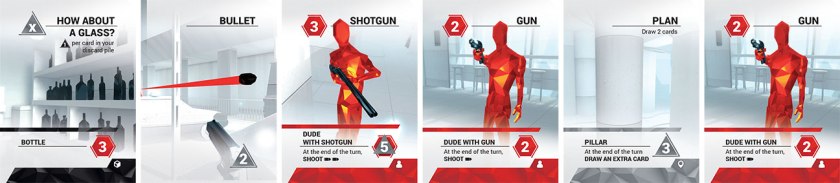
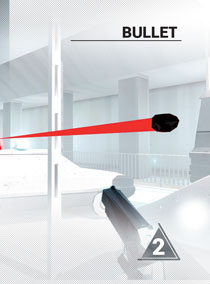
At the end of the turn the enemies in the Line will shoot. These bullets will go to the objectives discard pile. That’s right! The bullets don’t go straight to the Line. Just like the original videogame, you have some time to deal with bullets from distant enemies before they come back to haunt you.
superhot_bullet.jpg

When the obstacles deck runs out you shuffle their discard pile to form the new one and from this point onward bullets will sneak into the Line.

If a bullet leaves the line it will go straight into your hand – and stay there. This is a big problem because it has no use, takes up space and blocks you from drawing new cards at the end of the turn. If you get hit by four it’s game over!
superhot2

You might notice it takes four bullets to die when in the videogame one is enough. This is where I had to bend the rules. In the videogame you push a button and the level instantly resets. In a second you’re back in the action. In the card game you would have to separate the cards and go through the setup again. Three minutes, maybe?

That’s too much. It’s punishing and it makes the players dwell on their mistakes rather than give them the will to try again. Making the bullets a growing hindrance instead of the end game also let me bring a key aspect from the videogame, but I can’t mention it without spoiling!

SUPERHOT: The Card Game is coming to Kickstarter very soon. The campaign preview is already up, and I’d love to hear your feedback!
SUPERHOT: The Card Game – Designer Diary 1

boardgame, boardgame prototype, designer tips, game design, Superhot

SUPERHOT is a first person shooter in which time only moves when you do.

I’d like to tell you how I brought that core mechanic to SUPERHOT: The Card Game.

If you look at it closely, SUPERHOT is pretty much turnbased already. The super slow motion gives you time to look around and plan your next move, and the choice of when to speed it up is in your hands.

The mechanics in SUPERHOT: The Card Game are based on Agent Decker, whose core systems are deckbuilding and mission progression. The main thing that didn’t fit the theme was the Alarm, which is the main threat and the source of the hardest decisions.

This was the perfect time to bring in SUPERHOT’s core concept: “Time moves only when you do”.

superhot_line

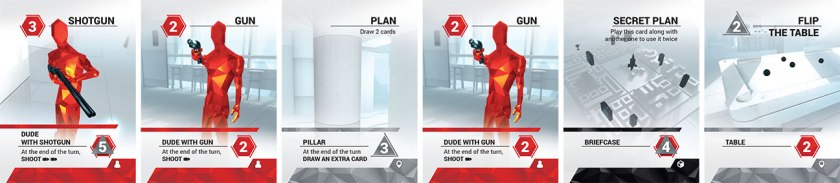
At the center of the table there’s a line of six cards. They represent where you are, what you see and which enemies are there. Using the cards in your hand you can destroy or knock them out, changing the line.

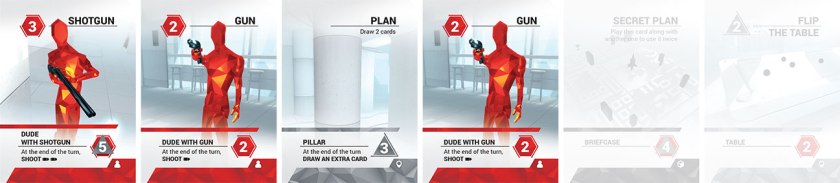
In the following example you have used two cards from your hand. This means the last two cards in the line will be discarded at the end of the turn.

superhot_line2

The remaining cards will scroll to the right and the line will refill back up to six cards.

It’s up to you. Use one card and the line barely moves. Use your whole hand and it can change radically. Time moves only when you move.

This change worked in both a mechanic and thematic sense but without the Alarm we needed a new source of tension. Something to make the players think twice about scrolling the line at maximum speed. Something that is coming in your direction.

I’ve got just the thing: bullets!

superhot_line3

The final piece of this puzzle creates interesting dilemmas, which I’ll cover in the next article.

SUPERHOT: The Card Game is coming to Kickstarter very soon. You can stay up to date by subscribing to the newsletter.

What if there were no bad cards?

designer tips, Multiuniversum

pic2926763

The game is almost over. It’s your turn and this time you have a chance of winning. You draw a card and – oh no! Not that card. That’s not the one you need. Your opponent takes the victory. Again.

We’ve all been there.

Every designer has its own process, but the starting point seems to be a big point of contention. Do you start with the theme (setting) or with mechanics (how the game plays)?

For Multiuniversum, it started with a question:

“What if there were no bad cards?”

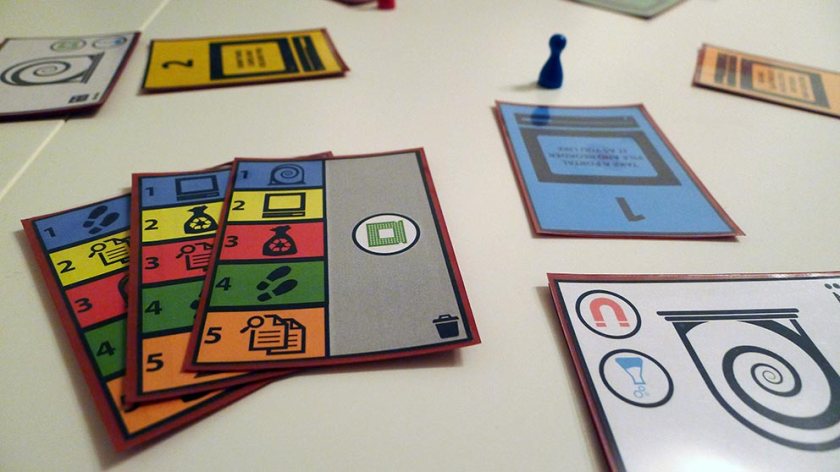
Every action card has all the possible actions in the game, shuffled around. You can find them on the left half of the action cards. Each action is in a slot with a color and a number, which corresponds to the computer stations on the center of the table.

The computer where your character is defines the slots you can use.

P1090328s

For example, in the above image you’re at Computer #1, so you can do any of the actions on the first slot of the cards.

If you use the “Move” action on the leftmost card, you can walk your scientist over to any other computer. If you move to Computer #3,  you’ll be able to use the actions on the third slot of your remaining cards.

This is the core of the game. That action you really need? You’re holding it in your hand. The challenge is to figure out how to chain the actions to make the most of what you’re dealt.

With three actions per turn, this creates a tree of possible choices for the players to explore while they wait for the next turn. It gives the players the feeling that they’re in control, and the solution can be found somewhere in their hand.

There’s no joy like seeing a silent, focused player unleash a mighty “Eureka”!

Multiuniversum will be published this June by Board & Dice. If you want to keep up to date with all the updates and awesome art, please consider subscribing to its BoardgameGeek page!

Designer’s Guide to Essen Spiel – Part 3

designer tips, event, game design

P1080458

In Part 1 and Part 2 we talked about how to prepare if you want to pitch your games at Essen Spiel. In Part 3 we’ll cover handy tips for the event itself, and what you should do after it’s over.

2. AT ESSEN SPIEL
Cloakroom and lockers
You can find these right at the door and they seem really useful but keep in mind there will be massive queues when the event closes. Get there earlier and you could save up to a whole hour. 

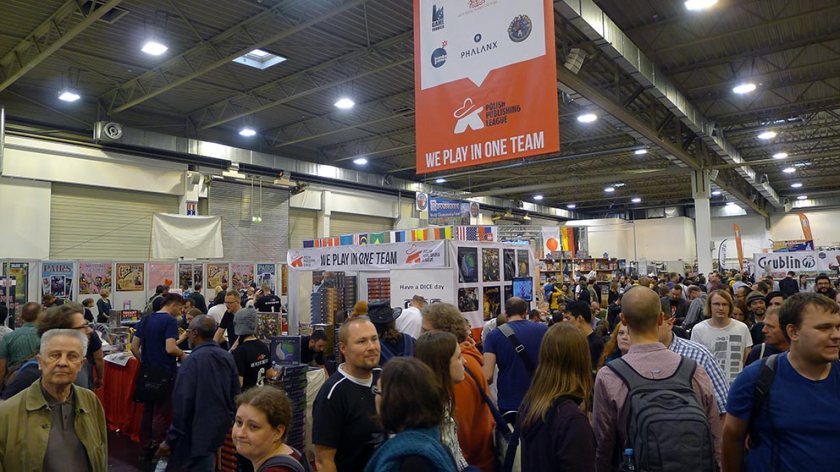
The event itself gets pretty tropical, so my advice is simply do not bring a coat.

AEG bags
It’s likely you’ll be picking up games during the day and the room in a backpack runs out pretty quick. If you get a game at the AEG booth, whatever the size, they’ll hand it to you inside an enormous bag. Handy!

Wellbeing
You’ll be talking a lot so be sure to bring water and lemon drops. Also, learn where the bathrooms are!


MEETINGS
Here it is, the moment you’ve been waiting for! Don’t panic.

A. Get there early
You want to cause a good first impression so get to the booth a few minutes before the meeting.

B. Remember the names
If you’ve scheduled the meetings by e-mail, it’s unlikely you’ll be able to identify the person who you’ll be talking to. You’re going to have to ask someone so keep that name handy!

C. Start with the sellsheets
Setting up the game takes time and space, and good publishers will tell you right away when they won’t even consider it. Start by showing the sellsheet and only bring the game out if they ask for it or you want to show a particular detail.

D. Bring an extra prototype
If they really like your game they’ll want a copy to play with their team. If you’re meeting other publishers on the same day, bring more than one copy!

E. Take notes 
Did they ask for a digital prototype or the rules? Don’t leave that to the end of the day, especially if you’re having a lot of meetings. Write that down as soon as possible so you can free your mind and focus on the next one. 


3. POST-ESSEN
Follow-up
Read your notes from the meetings and send all the follow-up e-mails you said you would! Even if they can’t read them right away they’ll be right there for when they can.

Read the notes
If the publishers were interested in your games, they might have suggested some changes that they’d like to see in order to consider publishing it. Use these notes to guide your game’s next steps.

Take it with a grain of salt
Don’t worry if you’ve left Spiel without a signed contract. You’ve started conversations, sent out prototypes and soon you’ll get more feedback. You might have even heard some things about your games that you don’t agree with.

Taking criticism can be hard but hopefully now that you’ve had time to cool off a bit you’ll be able to see it from their point of view. The publishers know what they’re doing and there are a lot of different elements that can factor into their feedback. The biggest one seems to be their line of games and production. Even if your game is great, if it doesn’t fit their line, the fans will find it odd and likely off-putting. If it requires exotic components they’re not used to making, it ramps up the production costs so much that it might not be worth the risk.

Now you have an idea of what they’re looking for and you can use it to update your games and even take it into consideration when starting new ones. 

Good luck!

P.S: How did it go for me? Very well actually, and there’s a hint in this very post. Stay tuned!

Designer’s guide to Essen Spiel – Part 2

designer tips, event, game design

gamesbymanuel_sellsheets

Last week we covered the first half of the necessary preparations to pitch your board games at Essen Spiel. This week we’ll cover the rest. Keep reading and you’ll be ready in no time!

Sellsheets
An essential part of the process. You don’t know what you’re going to find when you show up to a publisher meeting so there might not be enough time to set up a game or show the components – I had a couple meetings where there wasn’t even a table!

With a good sellsheet you won’t need anything else.

To put it simply, sellsheets are full page ads for your games. They should show the game’s name, theme, mechanics and components at a glance, with clear photos to paint a good mental picture. If you pick the game’s photos so that you can use them to teach the game, even better! That way you don’t even need to take it out of your backpack. 

At the end of the meeting let them keep it! Publishers will be looking at so many games during the event that naturally they’ll start to blend together. This is a great way to make sure they don’t forget it, and it’s also useful so they can show it to the rest of their team.

Physical Prototypes
It’s good to have at least one physical prototype with you. The publisher may want to see the components, how much room it takes or even the rules. When talking about the game it’s possible you want to refer to something that isn’t on the sellsheet so it’s handy to have it around.

There’s a small chance they’ll even ask you to set it up so they can play a couple of rounds!

If the publishers are interested in the game it’s very likely they will ask for a prototype. Unless you’re using very specific components it’s safe to assume they already have them at the office so don’t be surprised if they just ask you to e-mail files they can print and play.

Otherwise they might ask for a physical prototype! If you’re having multiple meetings in one day, be sure to bring more than one copy.

Be prepared!
This last step is entirely optional but I found it very handy! Compile a schedule with all the information you have about the meetings, the name of who you’re meeting, the time and what games they showed the most interest in. If you’re having a lot of meetings a small description of the type of games they publish is a really good way to regain focus from one to the next.

Print out the floor plans for the halls and mark down the booths in which you’ll have the meetings. If the schedule is too dense, you can also use this to figure out the fastest way between them.

There are some moments where the halls are so crowded there’s not enough room to reach into your backpack and take out a map. My solution was to fold them in half and keep them inside a notepad which I used to take notes throughout the event.

That’s it for the preparations!

Follow this link to read Part 3, which will cover key points during the event itself!

Designer’s guide to Essen Spiel – Part 1

designer tips, event, game design

222

After dreaming about it for years, I finally went to Essen Spiel in order to pitch my games to publishers. Have you ever thought of going? If so, read on!

1. PRE-ESSEN
When you book an appointment with a publisher you’re taking up time that could be spent on someone else. It’s unlikely that you’ll have a chance to play the games during the meeting so the publisher will have little more than your description to visualize your game.

If you can’t convince a publisher that your game is the best in the world, they’ll be more inclined to go with someone who can.

Book early
The longer you wait, the fewer affordable rooms and flights you’ll be able to find. If you really want to go, the best thing you can do is commit early.

Luggage
Your hand luggage should include a prototype of each game, a change of underwear and basic hygiene gear. Everything you can’t quickly replace in Germany should go in your hand luggage.

Schedule appointments
If you only follow one step in this guide make it this one! Otherwise it’s very unlikely that the publishers will have time to see your games.

Start by making a list of all the publishers you want to talk to. If you follow them in social networks you already know if they’re going to be there. If not, you’ll want to find out which publishers your games fit into.

To do so, there are two possible starting points. Spiel releases a complete exhibitor list and floor maps but it’s only published two weeks before the event. You can go through it and check the publisher’s websites to see which fit your games, but keep in mind there are a lot of them. This year there were 910 exhibitors.

If you want to start the list earlier there’s another way. BoardGameGeek compiles a list of all the new games that are going to be at Essen, and you can scroll through them to find games with theme and components that are similar to yours. From there it’s easy to look for the publisher’s contact details.

As for the e-mails, I kept them short:

Hello!

I’m a game designer and I’d like to show you my games! Do you have 30 minutes at Essen Spiel?

Thank you for your time,
Manuel

These few lines started several dialogues that lead to sending them a short description of the game’s themes and mechanics, along with a mid-game picture to make it easier to visualize.

It’s easy to go crazy and e-mail a big amount of publishers. I don’t blame you, this is exciting! One word of advice though: when booking meetings you should count on the time to go from meeting to meeting. Spiel is a huge event that takes place in several halls with hundreds of booths. I found half an hour to be just enough time to get lost and find my way to the right booth in time!

Follow this link to read Part 2, which will cover the last steps before the event!